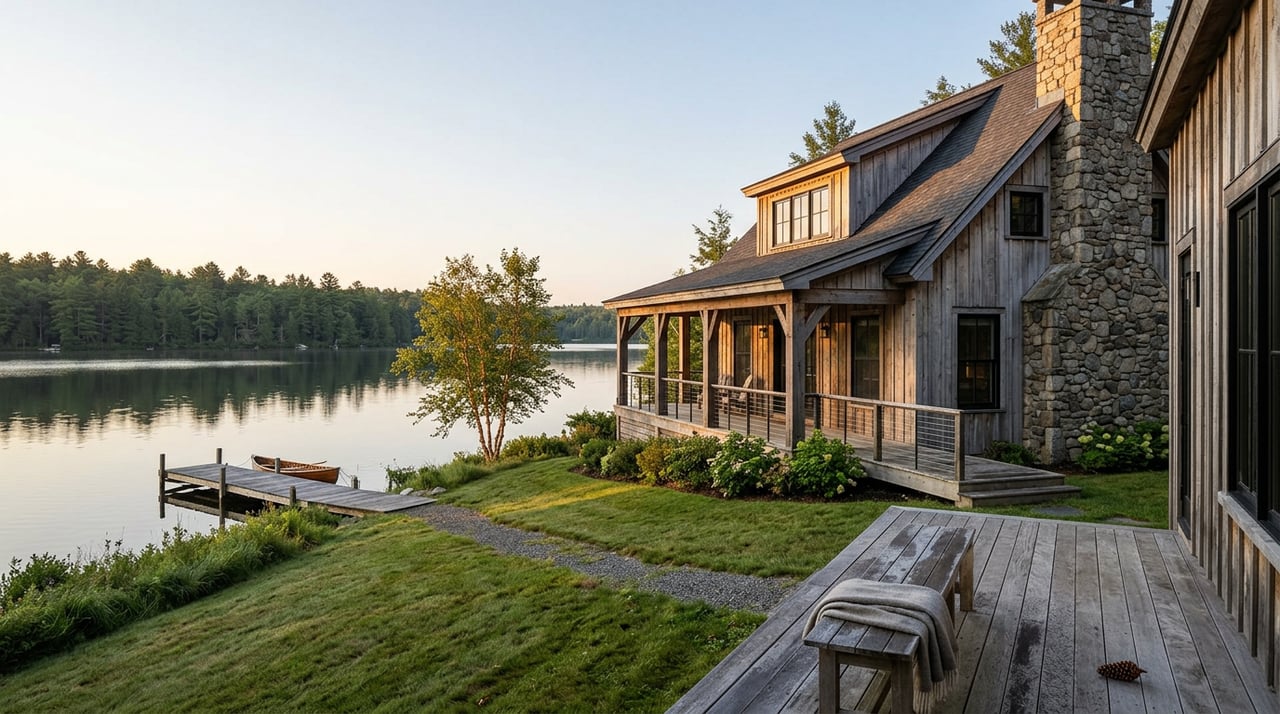
Every fall, somebody closes on a Lake Nottely cabin they fell for in July. The water was high, the dock floated a foot above a full, blue cove, and the listing said what every lake listing says: lakefront. Then January comes. The lake drops. The dock that looked so promising in the summer photos is now resting on mud, tilted at an angle that makes it more decorative than functional, and the new owner is on the phone asking what happened to their lake.
Nothing happened to it. This is what Lake Nottely does every year, and it is the single most important thing a buyer can understand before writing an offer on anything labeled waterfront in Union County.
The Reservoir Doesn't Read Listings
Lake Nottely isn't a natural lake. It's a Tennessee Valley Authority reservoir, and TVA runs it the way it runs its nine sister reservoirs upstream of Chickamauga Dam, which include Blue Ridge, Chatuge, and Fontana. Full pool on Nottely sits at 1,779 feet above sea level, spreading the reservoir across roughly 4,180 acres with about 106 miles of shoreline, according to Explore Georgia's Lake Nottely page. That's the number on the postcard. It is not the number that governs your dock in February.
TVA's own explanation of how it manages water levels across the system lays out the pattern plainly: reservoirs are held near full pool through the recreation season, roughly June through Labor Day, then drawn down gradually to make room for winter flood storage. The low point typically lands in January or February, and the lake climbs back toward full pool by late spring as rainfall refills the watershed. Right now, in mid-September, Nottely is past its summer peak and easing into that annual drawdown, the same slow release TVA has run for decades.
That swing isn't cosmetic. On lakes in this system, the difference between summer full pool and winter low pool commonly runs somewhere in the range of eight to ten vertical feet, depending on the reservoir and the year. On a lake as shallow and narrow as Nottely, that swing can be the difference between a cove that holds a boat and a cove that holds a puddle.
What the Listing Doesn't Show at the Closing Table
Here's the part that surprises even buyers who've done their homework on the drawdown: the water's edge you see on a summer tour may be far from the winter waterline. A listing may say lakefront, but that label doesn't tell you what the shoreline looks like at winter pool.
This matters in a very practical way: what you can build and where may require permits, so it isn't purely a matter of your own preference or your builder's opinion. A lake view that looks unobstructed in a listing photo taken from a boat may not reflect what you'll see from the property.
None of this means Lake Nottely is a bad place to buy. Union County residents and second-home owners have built a real lake lifestyle around it for decades, with Poteete Creek Park offering a county-maintained beach, boat ramps, and a campground that runs April through mid-October. It means the word lakefront is doing less work than buyers assume, and the gap between what it implies and what it guarantees is exactly where disappointment shows up after closing.
Why Two "Deep Water" Lots Aren't the Same Lot
Nottely is narrower and shallower than its regional neighbors, and it has been developed more densely along its shoreline, which is part of why it draws a different kind of buyer than the deeper, more forested coves around Blue Ridge Lake. That combination of shallow depth and dense development means the variation between individual coves and individual lots is wider than most buyers expect walking in.
A dock sitting in ten or twelve feet of water at full pool will likely still float comfortably at winter pool. A dock sitting in five or six feet of water at full pool may be sitting on exposed bank by January. Some coves on drawdown lakes only hold water when the reservoir is near full pool at all, meaning what reads as a lake frontage lot for half the year functions as a creek bed for the other half. The listing photo and the marketing copy can't tell you which lot you're looking at. Only the depth at that specific dock location, at winter pool, can.
This is the actual variable driving how one "lakefront" or "deep water" listing behaves differently from another that looks identical on paper. It has nothing to do with square footage or finish level, and everything to do with the shape of the lake bottom at one particular point on one particular shoreline.
What to Ask Before You Write an Offer
If you're comparing Lake Nottely lots or cabins this fall, a few questions do more work than any amount of scrolling through photos:
- What is the water depth at the dock location specifically at winter pool, not at today's level?
- Can the seller or listing agent produce photos from January or February, when the lake is at its lowest?
- What does the survey or plat show about the lot's boundaries near the shoreline?
- Are any permits or approvals associated with the dock, and do they match what's physically at the property?
- Has this cove historically held water year-round, or does it run dry in the winter months?
A seller who can answer these without hesitation has probably owned the property through at least one full drawdown cycle and knows exactly what they're selling. A seller who can't, or who steers the conversation back to the summer photos, is worth a slower, more careful look before you commit.
A Few Questions Worth Settling Upfront
Does every Lake Nottely lot deal with the drawdown the same way? No. Depth at the specific dock site, and how steeply the shoreline slopes from that point, determines how much the drawdown affects any individual lot. Two lots a few hundred feet apart can behave completely differently.
Could local rules also affect a dock? County or homeowners association rules might also apply to the property.
Does the lake ever stay high through the winter? TVA's operating guides show an expected range for each reservoir based on more than a century of rain and runoff data, but the agency has been clear that release schedules can shift with weather and system-wide needs. Treat any given year's timeline as a pattern, not a guarantee.
Buying on a TVA lake is still one of the better ways to put down roots in Union County, and plenty of owners on Nottely never think twice about the drawdown because they bought a lot where it simply doesn't matter much. The goal isn't to talk yourself out of a lake purchase. It's to make sure the word doing the selling on the listing sheet is backed up by what the reservoir actually does every January.
If you're weighing a Lake Nottely property against other options in Union County or across North Georgia's mountain towns, Laura Elleby and the E+E Group can walk the shoreline with you before you write an offer, not after. Discover Blue Ridge living: let's talk about your next move.
This article is general information, not legal, tax or financial advice. Consult a qualified professional about your situation.